Key Changes Florida Employers Should Prepare For
Here’s what Florida business owners need to know.
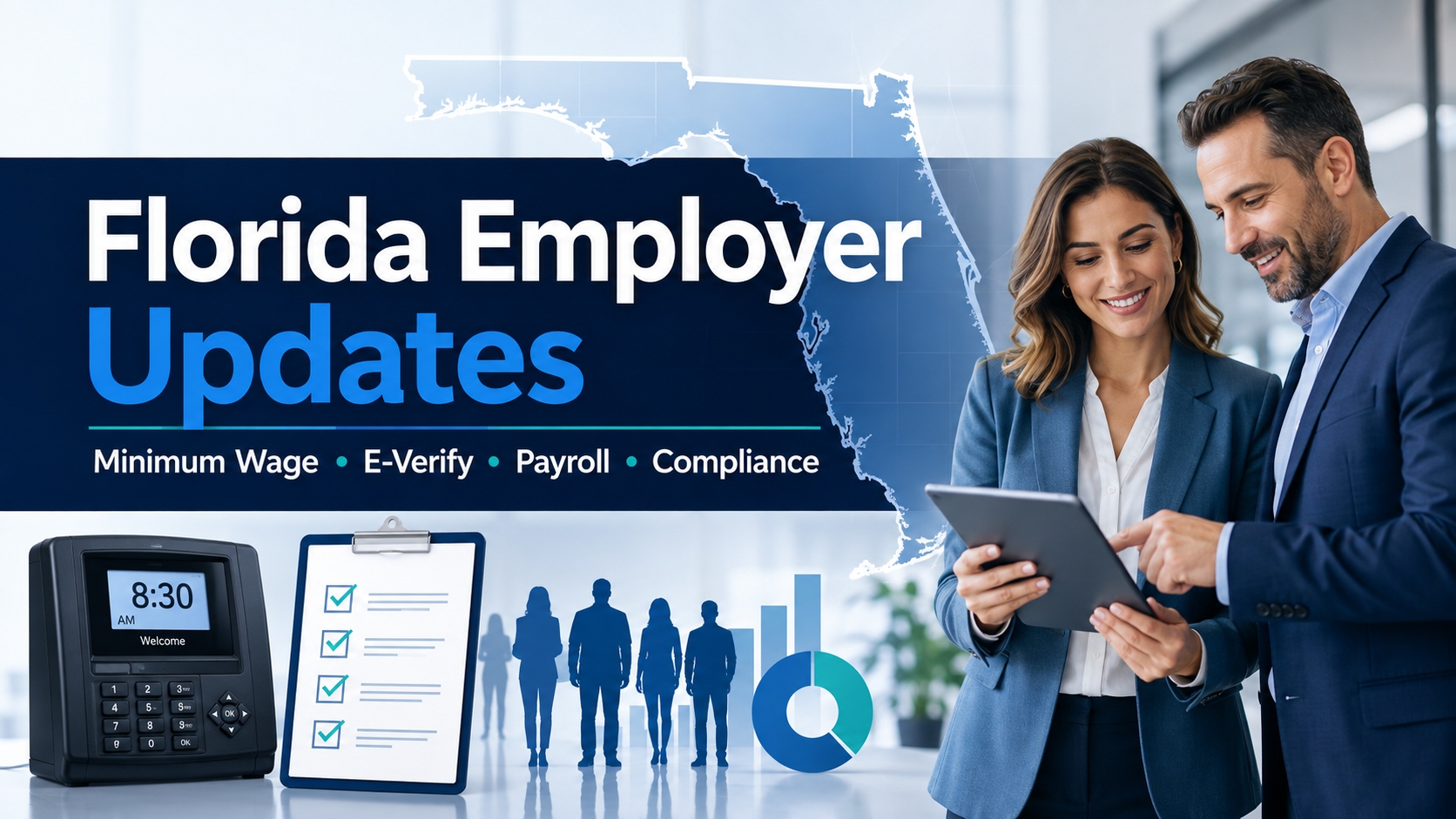
Florida employers should prepare for several important payroll, wage, hiring and employee-compliance developments. This week’s updates include Florida’s upcoming $15 minimum wage, expanded E-Verify reporting, paid-training requirements and a proposed employee benefit.
1.
Florida’s Minimum Wage Increases to $15 in September 2026
Florida’s minimum wage will increase from $14 to $15 per hour on September 30, 2026.
The minimum cash wage for tipped employees will also increase from $10.98 to $11.98 per hour when an employer properly uses the full $3.02 tip credit.
Before the new Florida minimum wage takes effect, employers should review:
- Current employee pay rates
- Payroll and overtime calculations
- Pay differences between newer and experienced employees
- Tipped-employee and tip-credit records
- Staffing rates and customer pricing
- Existing contracts and operating budgets
- Job postings and employment offers
Employers should also review employees earning slightly more than $15 per hour. The increase could create wage compression between entry-level employees and more experienced team members.
Preparing early can help Florida businesses avoid payroll errors, employee concerns and unexpected increases in labor costs.
2.
New E-Verify Report Requires Careful Review
E-Verify has expanded its Status Change Report to identify certain employee work-authorization documents that may have been invalidated.
This is especially important for Florida private employers with 25 or more employees, which are generally required to use E-Verify for new hires.
A match on the report does not necessarily mean an employee should be terminated immediately. The employee could have another valid form of work authorization. Employers should carefully review the employee’s Form I-9 documentation, follow the proper reverification process and seek qualified immigration counsel when necessary.
Failing to respond appropriately could create unauthorized-employment exposure. However, acting too quickly or requesting specific documents from an employee could also create discrimination concerns.
Florida employers should establish a consistent process for reviewing E-Verify status changes and documenting their response.
3.
Required Training and Orientation Time Must Generally Be Paid
Required orientation, meetings and job-related training generally count as paid working time under federal wage-and-hour rules.
This may include:
- New-hire orientation
- Workplace safety training
- Compliance meetings
- Software instruction
- Client-site onboarding
- Required videos or online training completed from home
Employers should make sure employees clock in before required training begins. Training time must also be included when calculating weekly overtime.
Businesses using temporary or staffing employees should confirm that workers are paid for client-required onboarding, regardless of whether the staffing provider or client is ultimately responsible for the cost.
Even small amounts of unpaid training time can become a significant wage-and-hour issue when the same practice affects multiple employees.
4.
Proposed Employer Benefit: Trump Accounts
Proposed federal rules may eventually allow employers to make tax-free contributions of up to $2,500 annually to Trump Accounts established for employees or their dependents.
If finalized, Trump Accounts could become another voluntary employee benefit that businesses use to support recruiting and employee retention. Employers may be required to create a written plan and follow certain nondiscrimination requirements.
These rules are still proposed. Employers should wait for final guidance before creating a program, promising the benefit to employees or changing payroll procedures.
No Major Florida Workers’ Compensation or OSHA Changes This Week
No significant new Florida workers’ compensation rules or federal OSHA standards affecting Florida employers were finalized this week.
However, employers should continue following existing workplace-safety requirements. Heat exposure, falls, electrical hazards and struck-by incidents remain major concerns for Florida businesses in construction, HVAC, plumbing, electrical work and landscaping.
How MyTown Solutions Helps Florida Employers
MyTown Solutions helps Florida businesses simplify:
- Payroll processing
- Pay-as-you-go workers’ compensation
- Staffing and employee hiring
- Employee benefits
- Workforce compliance and administration
Our goal is to help Florida business owners stay prepared, reduce administrative headaches and avoid costly surprises so they can focus on operating and growing their businesses.
Have questions about how these developments could affect your company? Contact MyTown Solutions to learn how our payroll, workers’ compensation, staffing and employee-benefit services can help.